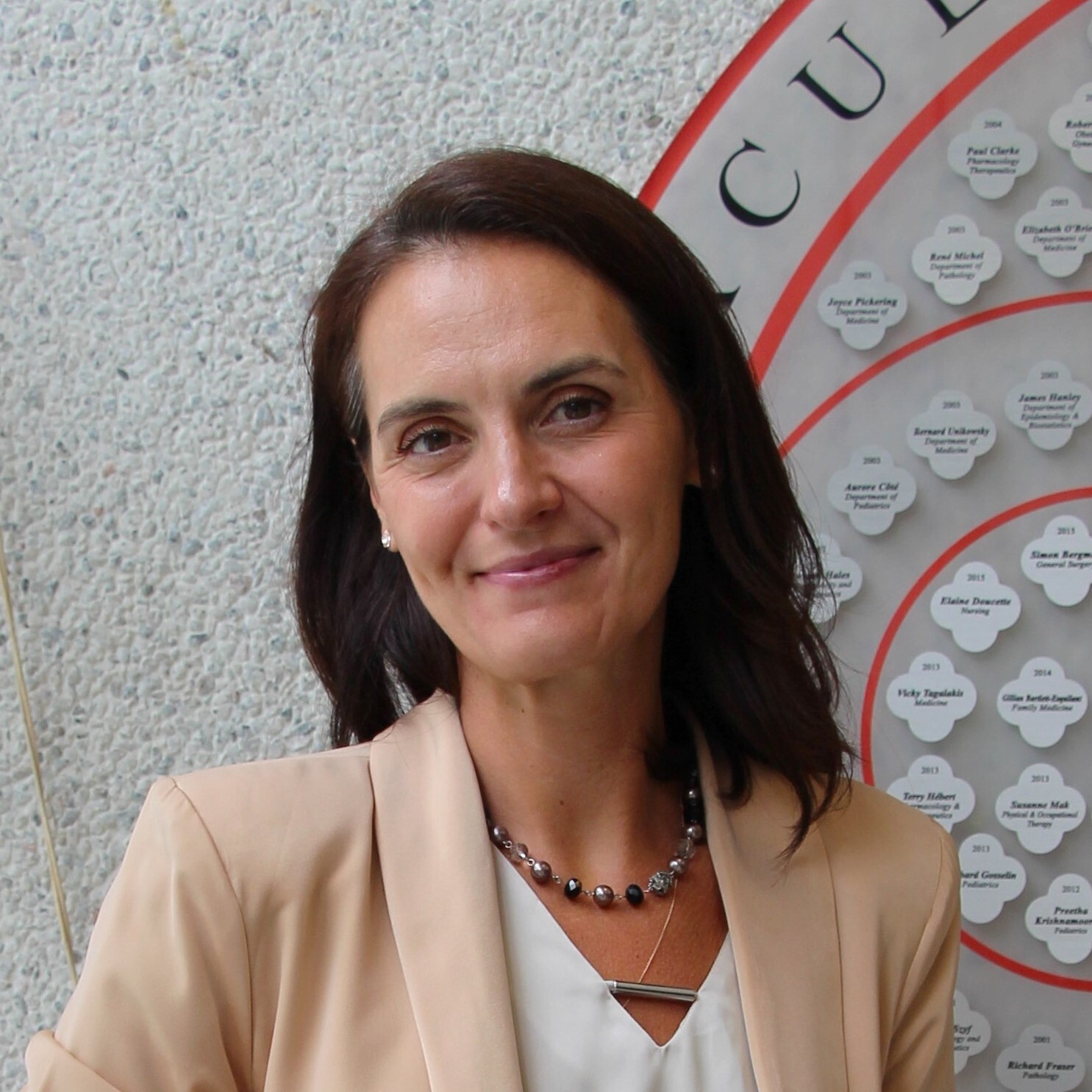
Tatiana Ogourtsova
Dr. Tatiana Ogourtsova, PhD, OT, is an Assistant Professor at McGill University’s School of Physical and Occupational Therapy and a researcher at the Jewish Rehabilitation Hospital, where she leads the RESI-ALLIANT KID Research Laboratory. Her research focuses on pediatric rehabilitation, digital health, implementation science, and knowledge translation to improve outcomes for children with diverse abilities and their families. Dr. Ogourtsova is recognized for developing innovative, family-centered solutions that bridge research and practice, leveraging e-coaching, telerehabilitation, virtual reality, artificial intelligence, and co-design approaches. She has secured over $3.27 million in research funding in leadership roles and has authored 177 scholarly contributions, including peer-reviewed publications, book chapters, editorials, and scientific presentations. She has also led the development of over 130 knowledge translation resources, including e-learning modules, clinical tools, and training programs. Her work has been recognized through awards such as the William Dawson Scholar Award, the Kids Brain Health Network Promising Researcher Award, the Eva Kehayia Recognition Award for Promising Young Investigator, and multiple Editor’s Choice Awards. Dr. Ogourtsova currently serves as Co-Editor of Physical & Occupational Therapy in Pediatrics and Associate Editor of the International Journal of Adolescence and Youth.
Innovations in pediatric rehabilitation: Co-designing the future of care
This presentation will provide an overview of the RESI-ALLIANT KID Research Laboratory and its mission to improve the health, participation, and quality of life of children with diverse abilities and their families through innovative, evidence-based, and family-centered approaches. Attendees will learn about the lab’s work in pediatric rehabilitation, digital health, knowledge translation, and implementation science, including the development of e-coaching programs, telerehabilitation resources, virtual reality interventions, and clinician training initiatives. The presentation will place particular emphasis on MindFlow Mastery, an innovative program designed to support emotional regulation and mental well-being in neurodivergent youth. Co-designed with youth, families, clinicians, and researchers, MindFlow Masterycombines virtual reality experiences with coaching and evidence-based emotional regulation strategies to promote resilience, self-awareness, and coping skills. The talk will highlight the program’s development process, preliminary findings, and lessons learned from engaging youth and families in the co-creation of digital mental health solutions. Attendees will gain insights into how technology and partnerships can be leveraged to create accessible and meaningful supports for children, youth, and their families.