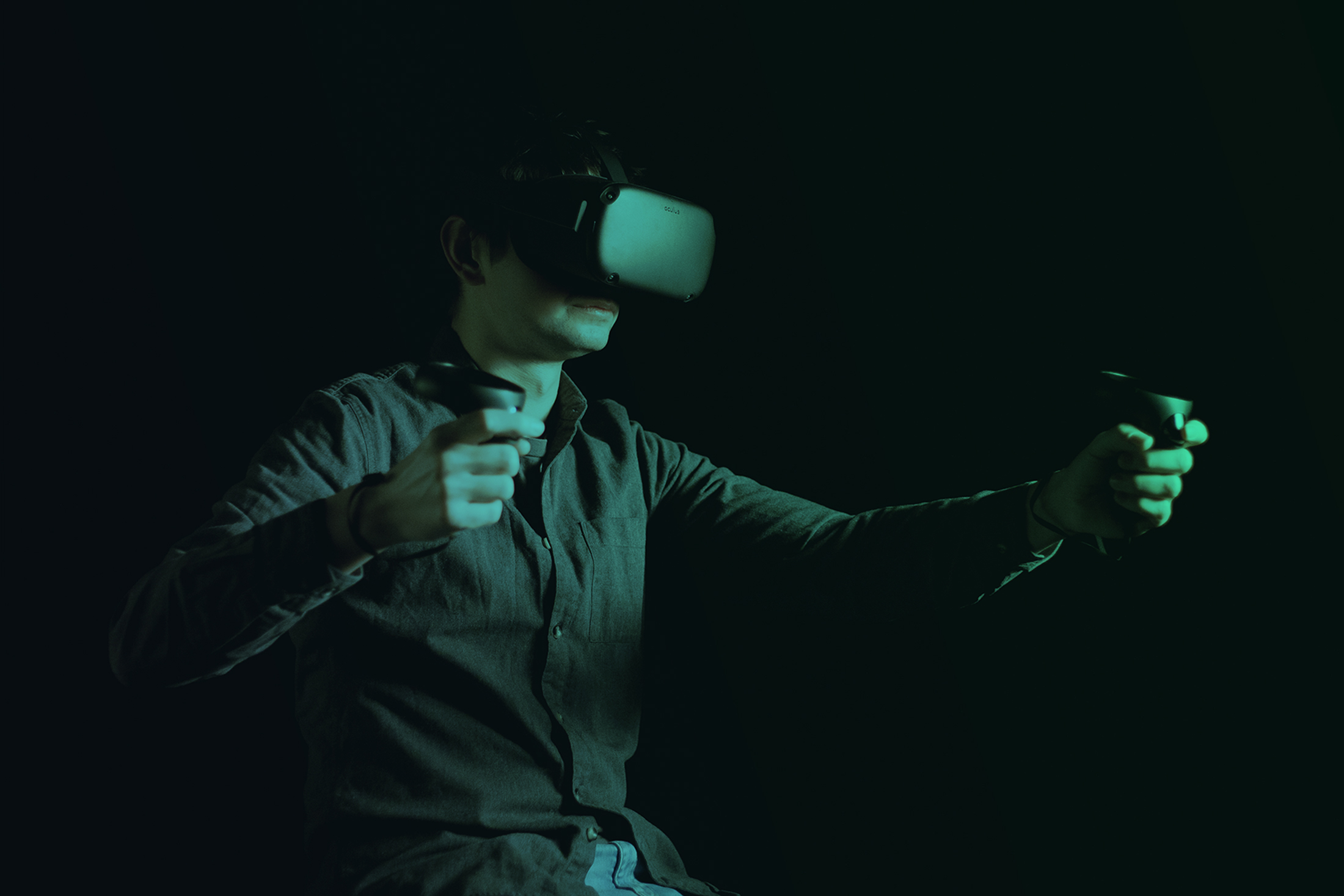
A preparatory moment with Flow
Immersive nature and meditation across cancer care, addiction recovery and emerging veterans’ pathways
XR4REHAB Community Conversations by Andy Graham · October 2026
What helps someone feel ready for rehabilitation? Alongside the practical arrangements of care, there is the experience of arriving for a session: feeling uncertain, distracted or unsure what to expect. In conversation with XR4REHAB, Tristan Gribbin of Flow describes a potential role for immersive wellbeing at this point in the patient journey.
“It’s like a preparatory moment,” she says. “You’ve got that readiness factor.”
This idea is already being explored in research. A pilot randomised study at the Champalimaud Foundation in Lisbon tested a brief Flow-based experience before breast-cancer surgery, reporting promising findings on preoperative distress. Alongside this work, Flow’s experience in healthcare and recovery settings is opening further questions about preparation for care.
An invitation into meditation
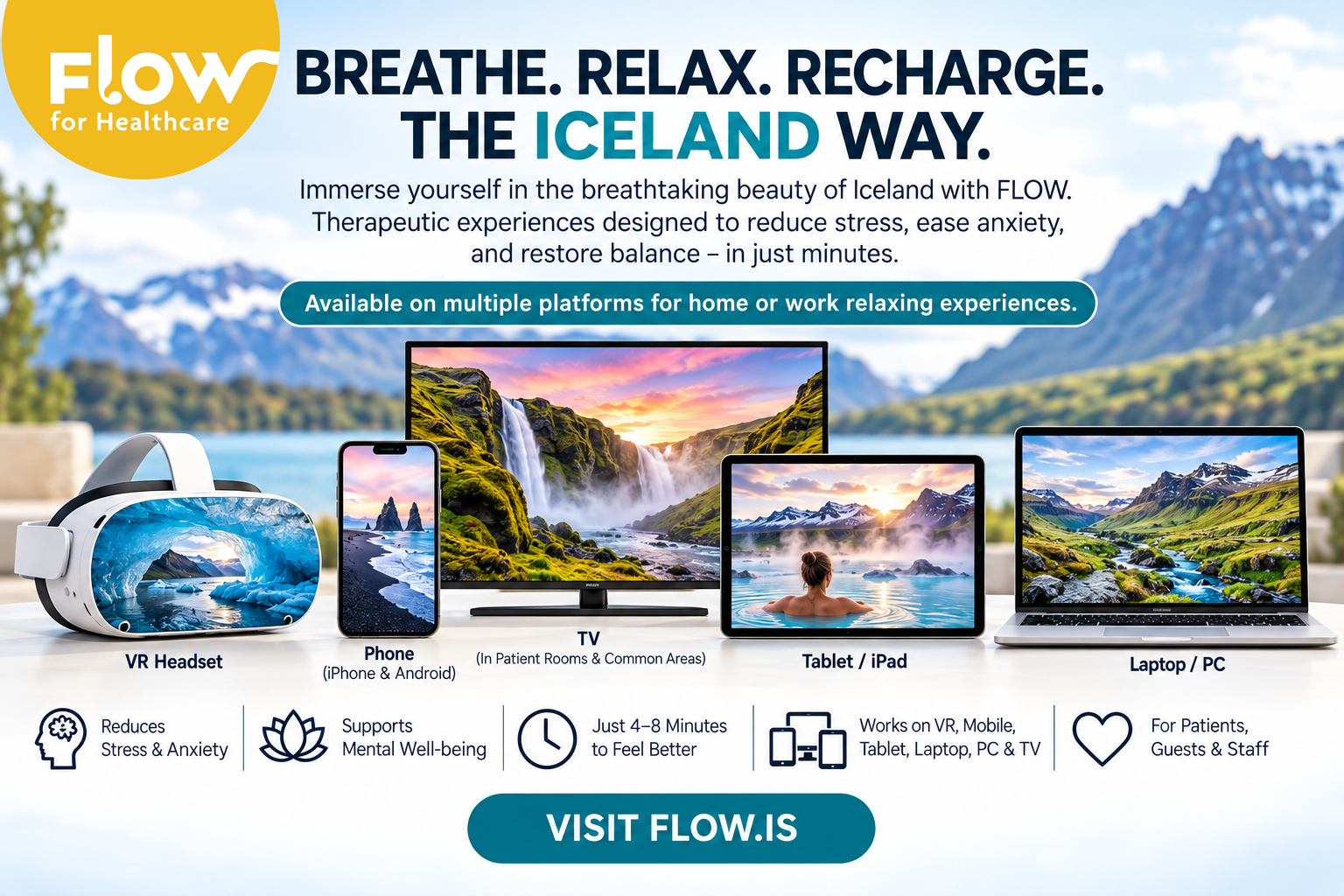
Flow’s experience begins in filmed Icelandic nature. Tristan emphasises the choice of authentic landscapes rather than computer-generated environments, with scenes selected to avoid visible signs of human activity. Meditation, spatial sound and music accompany the imagery, while the experience also offers breathing, stretching and movement.
Choice is central to her description. Users can turn guidance on or off and choose how they want to engage. The language is intended to support personal agency: “we are inviting them into a space where they can meditate.”
Flow describes sessions lasting four to eight minutes, designed to fit around waiting, treatment or recovery. Its broader platform includes mobile, web and television access. The aim is to make meditation available in different circumstances and to offer an alternative when someone prefers a familiar screen.
Supporting people through cancer care
According to Tristan, Flow’s move into healthcare was prompted by organisations approaching the company during the pandemic. One setting was the haematology and oncology treatment ward at Iceland’s National University Hospital, where she says Flow has now been available for more than three years.
She describes patients coping with uncertainty, disrupted sleep, anxiety and physical discomfort, and the value they have reported in having access to an immersive wellbeing experience alongside treatment.
A further initiative is being developed in Texas through XR Impact Network. Flow’s written account describes plans to involve approximately 50 adults with cancer, with evaluation led by UTSW medical students under physician supervision. Sleep and wearable-derived outcomes are areas of interest.
The Texas project remains in development. Its implementation focus is relevant to other services: how can a short wellbeing experience be introduced into an existing care environment, supported by staff and evaluated in a way that informs future use?
Preparation within addiction recovery
In the UK, Tristan describes Flow’s use through The Forward Trust in drug and alcohol recovery settings. Current access, in her account, centres on headsets at individual centres. Expanding access for people to use at home is an aspiration rather than an established part of that arrangement.
During our discussion, I suggested “pre-habilitation” as a way of thinking about preparation for a therapeutic session. Tristan’s response was “a preparatory moment”: helping someone feel present, connected and ready to engage. Here, the term describes a proposed role in readiness for therapy.
For rehabilitation teams, this raises a practical question: could a brief, optional experience before a session support engagement in what follows? Exploring when to offer it, how people choose to use it and what happens afterwards could help shape that role.
An emerging route into veterans care
Flow also reports a recently signed distribution agreement with USVetServe. Tristan presents this as a potential route to US veterans and, potentially, federal healthcare settings. The relationship is at an early stage.
Our conversation touched on possible relevance to people experiencing post-traumatic stress disorder (PTSD). The partnership offers a route to explore suitability, support needs and outcomes; a completed veterans’ implementation or PTSD-specific evaluation was not reported.
Existing evidence and the next questions
The Champalimaud pilot trial involved 60 women awaiting breast-cancer surgery. Participants received eight minutes of VR nature with guided meditation, the same VR nature without guidance, or usual care. The researchers used a study-specific version of Flow.
Both VR groups showed significantly lower self-reported anxiety and heart rate than usual care. The meditation group also showed a significant reduction in surgery-specific fear compared with usual care, although there was no significant difference between the two VR groups. The intervention was well tolerated, with no participant dropout.
The report is available as a medRxiv preprint, which has not been peer reviewed. Read the Champalimaud pilot study
These preliminary findings concern immediate preoperative distress. They support further investigation, but do not establish effects on cancer outcomes, addiction recovery, PTSD or longer-term rehabilitation. The next question is whether short-term changes translate into meaningful engagement and everyday benefits in each setting.
Making it work in everyday care
For implementation, Tristan’s advice is clear: “start with the clinical need and workflow, not the technology.” Key implementation factors to consider include when an experience is introduced, who supports it, the staff time involved and how devices are managed. Providing access through different formats, such as a tablet or smartphone, is intended to accommodate preferences and support continuity beyond the clinic.
The longer-term ambition is “a pathway to meditation whenever, wherever.” Tristan wants people to take what they learn about breathing, focus and movement into everyday life, including time in nature without a device.
Flow welcomes contact from XR4REHAB clinicians and researchers who see a possible role for immersive wellbeing within an existing patient pathway. The next step is to work together on implementation and evaluation that can clarify where it is useful, for whom and with what support.
Find out more: Flow for healthcare